The Co-Product Barrel Is the Fattest Since 2022
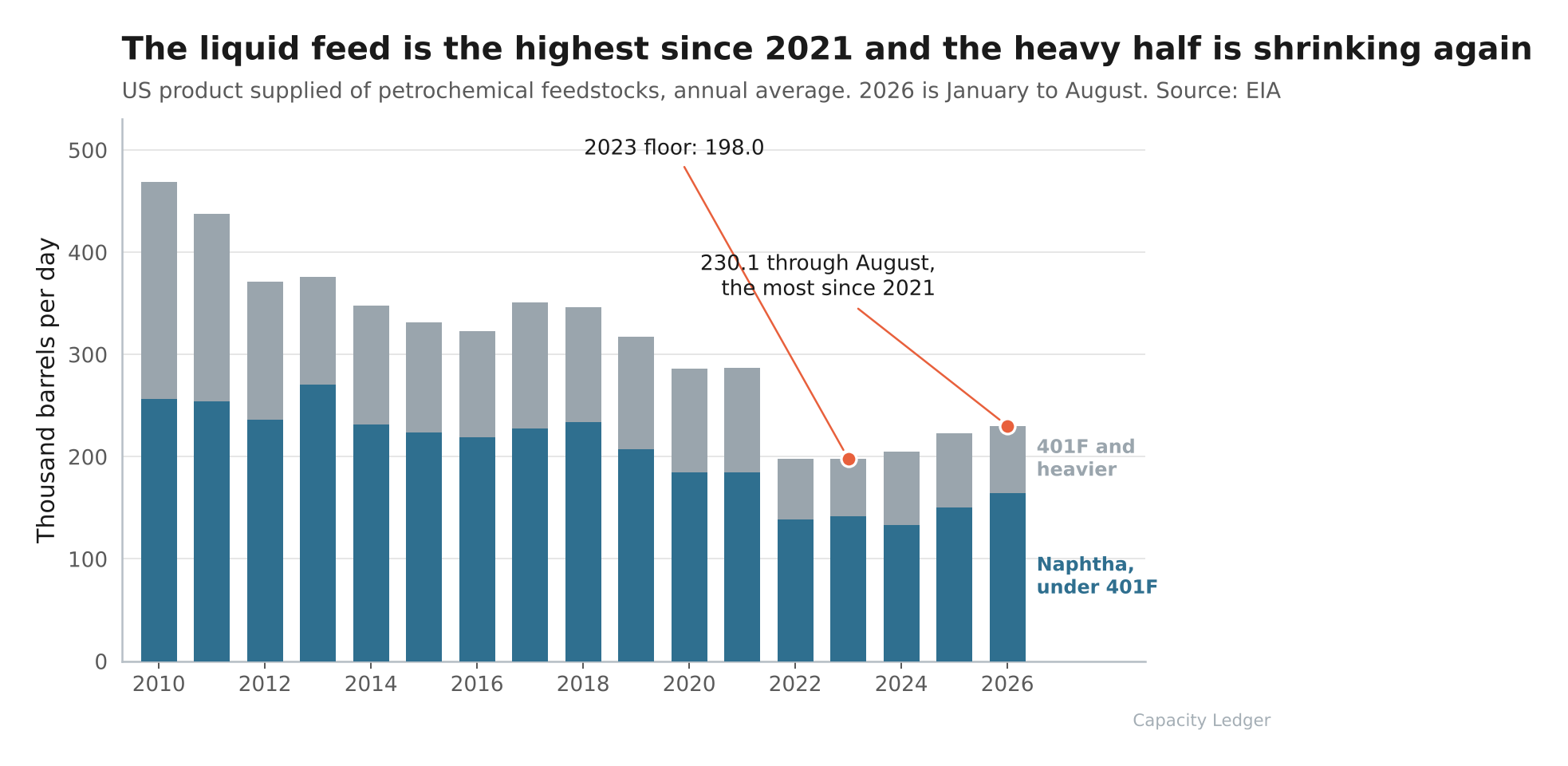
EIA's October 30 release puts US liquid petrochemical feedstock use at 230,100 barrels a day through August, the highest annual average since 2021 and a third straight year of gains off the 2023 floor. All of this year's growth is domestic refinery naphtha, the 401F-and-heavier half is shrinking and being exported, and ethane still grew faster than the liquids did.
In 2004 the US petroleum system handed the chemical industry 756,000 barrels a day of naphtha and heavier oils. That was the peak year, and nothing since has come near it.
EIA published August data in the Petroleum Supply Monthly on October 30. The same two series now average 230,100 barrels a day for 2026 through August, or 30.4% of the 2004 figure.
It is also the highest annual average since 2021, and a third consecutive year of gains off a floor of 198,000 barrels a day in 2023 (chart below).
"Does a liquid feedstock recovery actually put more co-product molecules in the market?"
The trailing twelve months through August run 224,400 barrels a day, the fattest twelve-month window since August 2022. Everything downstream of a liquid feed scales with that number: the C4s, the pygas, the benzene and toluene an ethane cracker never makes.
One honest wrinkle before the payoff. August itself printed 233,000 barrels a day against 249,000 a year earlier, so the month was down year on year.
The recovery lives in the averages.

The rest of this brief is for subscribers.
The capacity math, the trade-flow read, and what it means for the products you buy.
$50 a month, or $400 a year.
Already a subscriber? Sign in