The Phosgene Plant That Didn't Close
In March, VanDeMark filed a WARN notice for a May 25 shutdown of the largest merchant phosgene plant in the United States. The plant is still there. What that does to the removal column, and to anyone who requalified away in the spring.
If you buy chloroformates, carbazates or fatty acid chlorides in North America, March handed you a decision.
VanDeMark Chemical told New York State it was shutting its Lockport plant. The March 4 WARN notice put 69 jobs on the line and carried a stop date of May 25.
There was no press release and no explanation. C&EN found it the way everyone else found it, by reading the state's dashboard, and wrote the sentence plainly: the company put out no public announcement.
The plant is still there.
"How many entries in a removal column are closures that got cancelled, and how would you know?"
We spent July building the answer to a different question, which was how you find a closure early. This is the other side of that bill.
What VanDeMark Actually Is
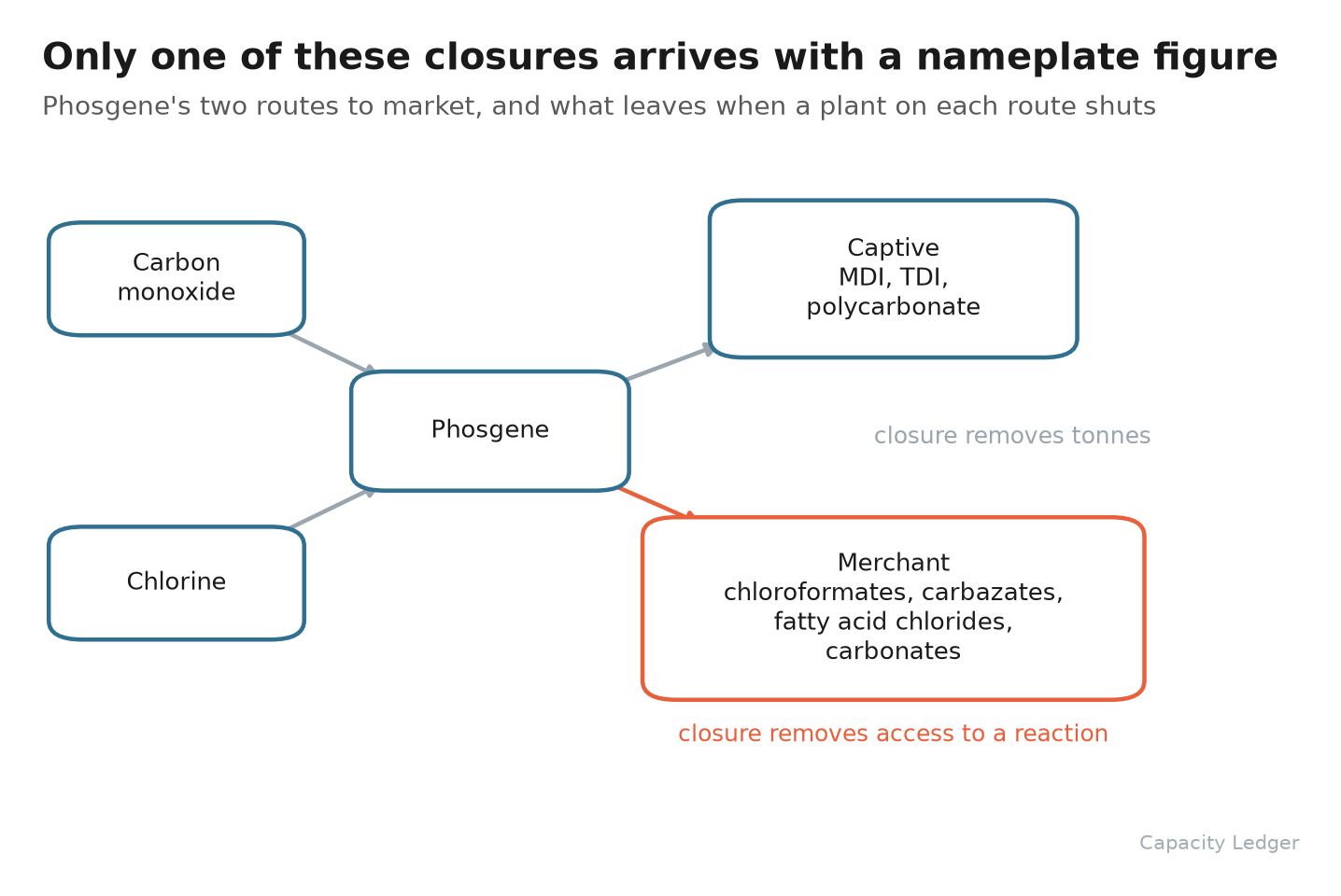
Phosgene gets made in two places, and the difference decides what a closure costs you.
Most of it never leaves the fence. Covestro, BASF and BorsodChem run carbon monoxide and chlorine into phosgene so they can run phosgene into MDI, TDI and polycarbonate a few hundred metres away. When one of those sites goes down, the loss arrives with a nameplate figure attached, because the tonnes were the point.
The other place is much smaller and much harder to replace. VanDeMark has been making phosgene at Lockport since 1951 so that a pharmaceutical or agrochemical company that will never hold a phosgene permit can still buy a chloroformate. C&EN called it the largest US merchant manufacturer of phosgene in 2014, when it bought Framochem of Kazincbarcika and combined "two of just a handful of merchant producers" into 22,000 tons of annual capacity across the two sites (chart below).
Read the catalogue and you can see who the customers are: alkyl and alkenyl chlorides, carbazates, chloroformates, fatty acid chlorides, carbonates, isocyanates, and a line the company labels defense critical chemicals. Pharma, agchem, biotech, defense.
None of them are buying tonnes. They are buying a reaction they are not allowed to run themselves.

The rest of this brief is for subscribers.
The capacity math, the trade-flow read, and what it means for the products you buy.
$50 a month, or $400 a year.
Already a subscriber? Sign in